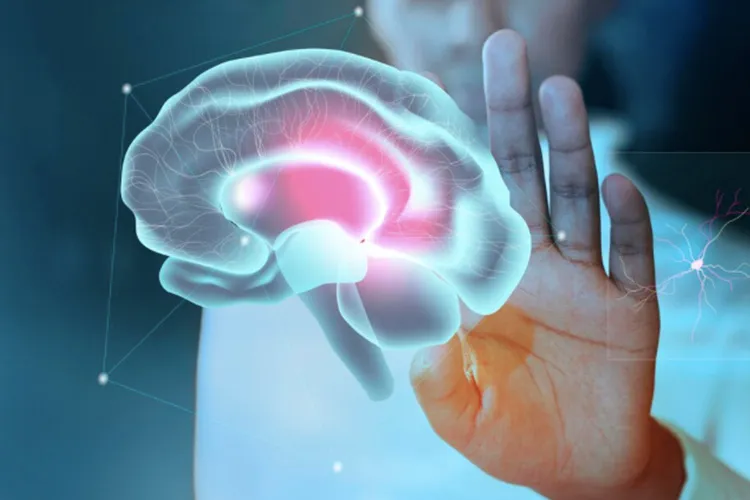
Stroke does not only damage brain tissue. One of its most critical consequences is injury to neural conduction pathways — the communication network that carries motor commands from the brain to the muscles.
When these pathways are disrupted, the brain can no longer control movement accurately, leading to long-term motor impairments and functional disability.
What Are Neural Conduction Pathways?
Neural conduction pathways consist of:
- Motor cortex and central nervous system neurons
- Descending motor tracts (especially the corticospinal tract)
- Synapses and neural junctions
- Peripheral nerves and skeletal muscles
Their primary role is to transmit precise, continuous, and coordinated motor signals that allow voluntary movement.
How Stroke Damages Neural Conduction Pathways
After ischemic or hemorrhagic stroke, neural pathways are affected through multiple mechanisms:
- Direct neuronal damage: Death of neurons and interruption of motor tracts
- Myelin disruption: Slower and weaker signal transmission
- Signal disorganization: Distorted or fragmented neural impulses
As a result, the brain may generate motor commands, but those signals fail to reach the muscles correctly.
Effects on Post-Stroke Motor Sequelae
- Limb weakness or paralysis: Muscles receive insufficient or absent neural input
- Spasticity and muscle stiffness: Loss of inhibitory brain control over reflex activity
- Loss of fine motor control: Difficulty opening the hand, extending fingers, or grasping objects
- Gait and balance disorders: Delayed and uncoordinated signals to the lower limbs
- Tremor and abnormal reflexes: Caused by unstable or misfiring neural transmission
Why Neural Pathway Damage Slows Recovery
Motor recovery after stroke is not simply muscle strengthening. It requires retraining the brain and rebuilding neural pathways.
Without proper stimulation:
- Neuroplastic reorganization remains limited
- Rehabilitation gains are inconsistent or temporary
- Long-term functional improvement is reduced
Restoring Neural Conduction: The Key to Motor Recovery
Effective post-stroke rehabilitation focuses on:
- Reactivating brain–nerve–muscle connections
- Correct, repetitive, task-specific stimulation
- Long-term, consistent training
When neural conduction pathways begin to recover, motor signals become clearer, muscle responses improve, spasticity decreases, and movement becomes more controlled.
Conclusion
Post-stroke motor impairments are fundamentally the result of damaged neural conduction pathways.
Meaningful recovery depends on restoring these pathways through brain-centered, consistent, and long-term rehabilitation, allowing patients to regain movement, independence, and quality of life.